

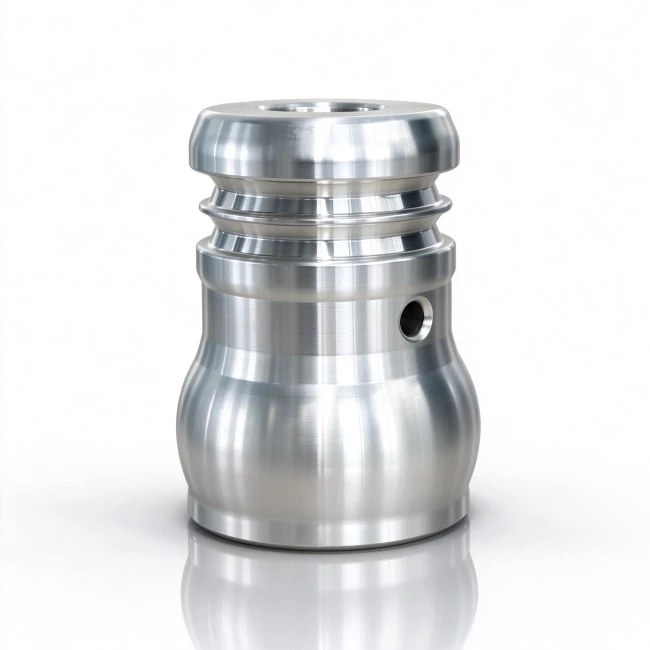
Cangzhou Jianbo Electric Power Equipment Co., Ltd. is one of the most reliable manufacturers and suppliers of gis tapered transition adapter in China. With abundant experience, we are committed to providing high quality customized service for global clients. If you're going to buy bulk gis tapered transition adapter made in China, welcome to get free sample from our factory.
|
Product Name |
GIS Tapered Transition Adapter |
|
Material |
6061-T6 Aluminum Alloy (customizable upon request) |
|
Manufacturing Process |
CNC Precision Turning-Milling Composite Machining |
|
Lower End (Welding End) |
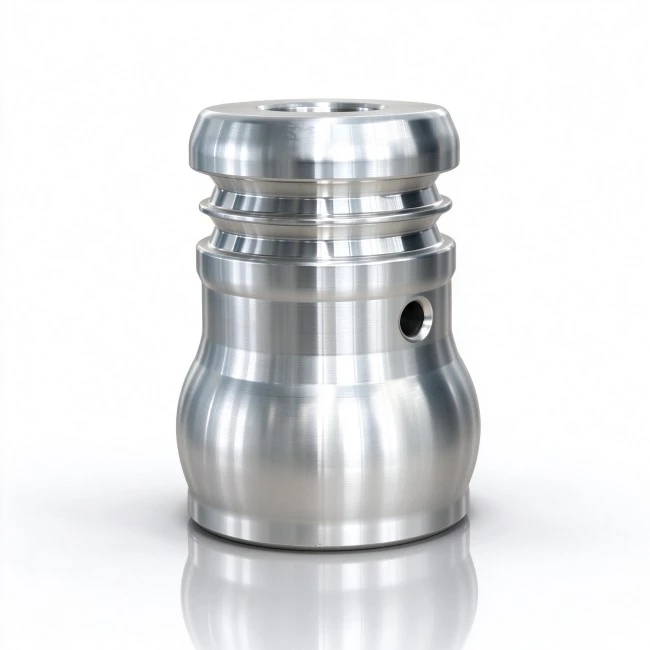
Large-diameter cylinder with welding bevel, used for welding to the GIS housing wall. |
|
Upper End (Connection End) |
Small-diameter stepped shaft with multiple sealing grooves, for plug-in connection with external devices. |
|
Surface Treatment |
Anodizing / Conductive Oxidation / As-machined Finish |
|
Applicable Equipment |
GIS (Gas Insulated Switchgear) |
The GIS Tapered Transition Adapter is a tapered reducer adapter fixed at the side wall opening of the GIS housing. The large-diameter lower end cylinder with bevel is welded into the main housing, while the small-diameter upper stepped shaft with sealing grooves plugs into external devices, with the intermediate drum-shaped section providing a smooth caliber transition. The entire unit is CNC precision machined from 6061-T6 aluminum alloy, with strict control over concentricity and sealing groove precision. It is dedicated to non-standard interface adaptation, retrofit expansion, and caliber transition connections.
Product Advantages
1. Structural Adaptation and Welding Optimization: The lower welding end is equipped with a bevel matched to the housing wall thickness, and the upper stepped shaft is adapted for plug-in sealing connection. Through wall thickness and bevel design optimization, the risk of on-site welding thermal deformation is reduced, maintaining the upper end's concentricity and sealing reference after welding.
2. Precision Sealing Fit: The sealing grooves and mating surfaces of the stepped shaft are formed in a single clamping operation, ensuring high dimensional consistency and effectively reducing the risk of SF₆ gas micro-leakage, meeting the housing sealing requirements of GIS gas chambers.
3. Material and Surface Treatment Options: 6061-T6 aluminum alloy is selected for its electrical conductivity and heat dissipation, suitable for housing grounding scenarios. Surface treatments are diversified by application: conductive oxidation for conductivity, anodizing for weather resistance, and as-machined finish for subsequent customer-specific processing.
4. Drawing-based Customization and Batch Reproducibility: Parameters including reducer ratio, sealing groove type, welding bevel, and side functional holes can all be adjusted according to project drawings. Under the same drawing, machining and inspection processes are standardized to ensure consistent benchmarks across multiple units, meeting the batch delivery needs of high-voltage switchgear manufacturers.
Product Applications
•Conductor feed-through at GIS housing side walls and flange connection with external bushings and transformers.
•In SF₆gas insulated chambers, serving as a sealed adapter interface between the housing and external devices.
•Non-standard interface modification and capacity expansion for 110kV–550kV GIS switchgear.
•Metal structural locations in gas insulated switchgear that require central feed-through and peripheral flange fastening.
FAQ
Q1: Can this GIS Tapered Transition Adapter be purchased as a standard part?
A: No. It is a customized part derived from the specific housing opening and external device requirements. The lower end diameter, drum-shaped section length, stepped shaft sealing groove dimensions, and bevel form must all be determined by drawings. No stock is available.
Q2: Can the side functional hole be omitted?
A: Yes. It is made according to drawings by default. If only a pure reducer adaptation is needed, the side hole can be omitted. If radial holes for exhaust or sensor interfaces are needed later, their positions can be marked during the drawing stage to avoid secondary machining after completion.
Q3: Is it difficult to control welding aluminum alloy to the GIS housing?
A: The factory reduces risks through reasonable bevel preparation, wall thickness control, and concentricity assurance. On-site welding must still be performed by a team qualified in aluminum welding. We provide bevel profiles and recommended gaps but do not replace on-site welding operations.
Q4: How to choose between conductive oxidation and anodizing?
A: If this tapered transition adapter is located at the main circuit housing requiring shell conduction and grounding, conductive oxidation is preferred. If outdoor weather resistance and wear resistance are prioritized, anodizing is recommended. If the customer has their own subsequent processing line, as-machined finish can be delivered first.
Installation Instructions
1. Inspection and Cleaning: Upon unboxing, verify identification and drawings, and check the welding end bevel, stepped shaft sealing grooves, and drum-shaped transition section for any transport damage. Before assembly, clean the mating surfaces with a clean soft cloth to ensure no chips, oil, or dust remain.
2. Welding and Plug-in Connection: Position the lower large-diameter cylinder at the housing side wall opening. After confirming concentricity, welding should be performed by a qualified welder, avoiding direct flame heating on the upper end sealing groove area. Install the sealing ring on the upper stepped shaft and smoothly insert it into the mating interface, confirming full insertion.
3. Air-tightness Verification: After assembly, perform an overall air-tightness test with the GIS gas chamber. Leak detection at the reducer transition area should be included in the final inspection record.
Hot Tags: GIS tapered transition adapter, China GIS tapered transition adapter manufacturers, suppliers, factory


