

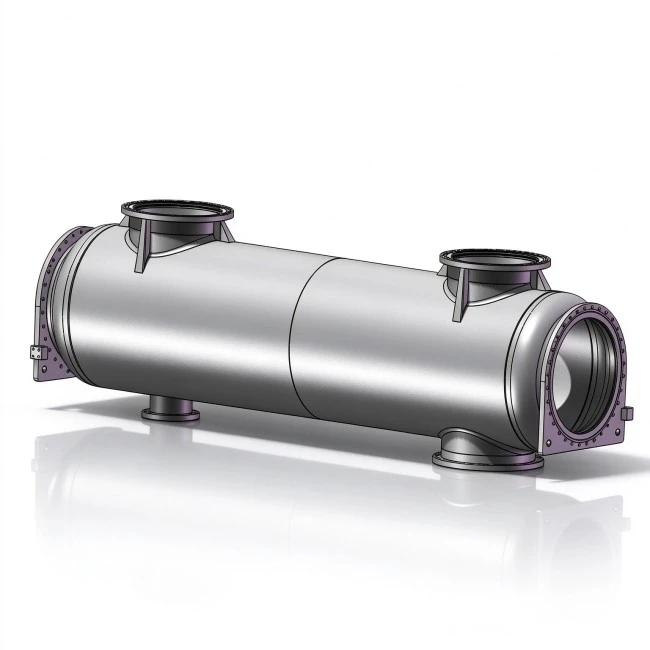
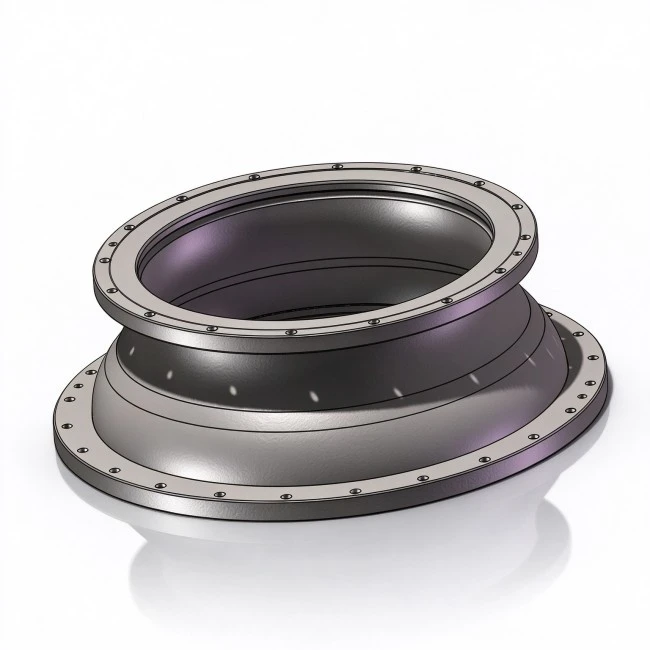
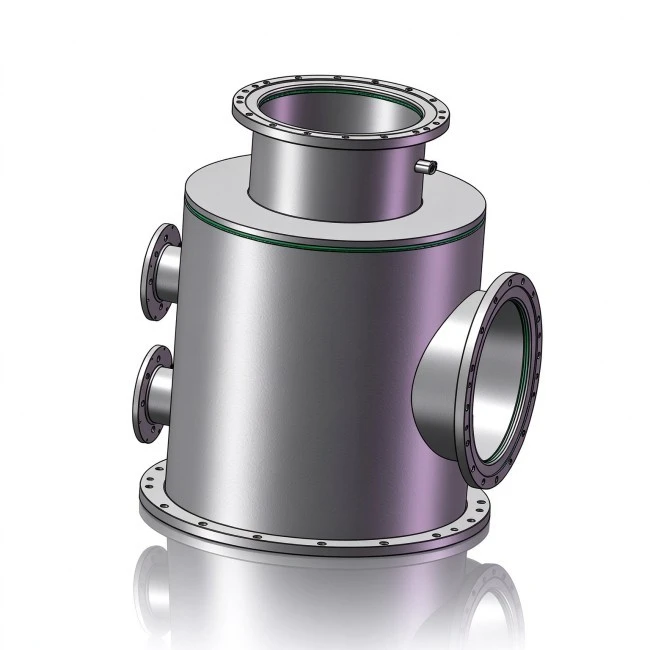
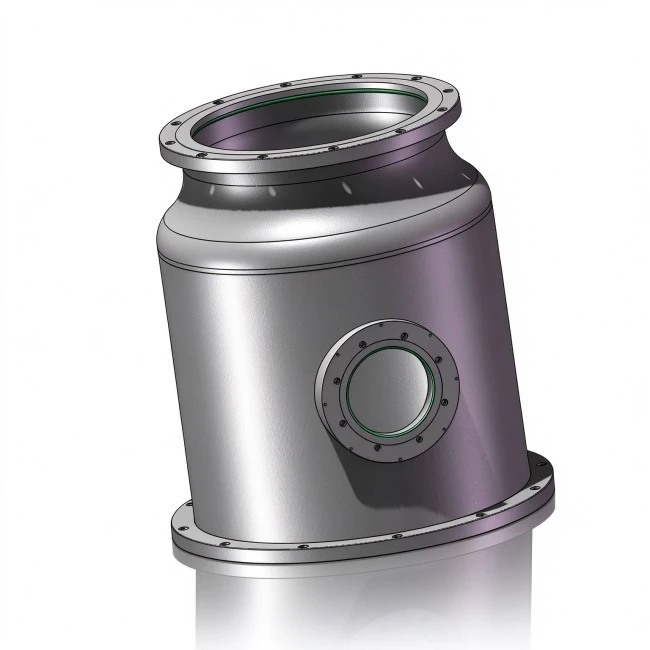
Cangzhou Jianbo Electric Power Equipment Co., Ltd. is one of the most reliable manufacturers and suppliers of gis reducing transition busbar enclosure in China. With abundant experience, we are committed to providing high quality customized service for global clients. If you're going to buy bulk gis reducing transition busbar enclosure made in China, welcome to get free sample from our factory.
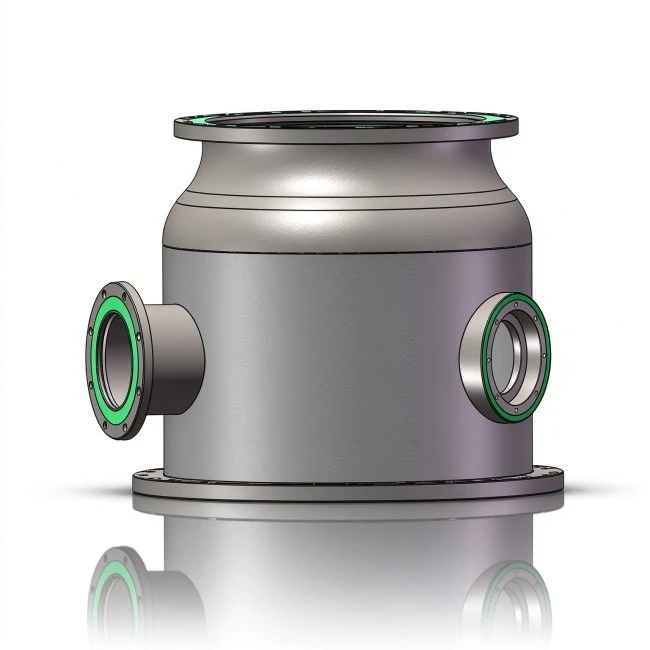
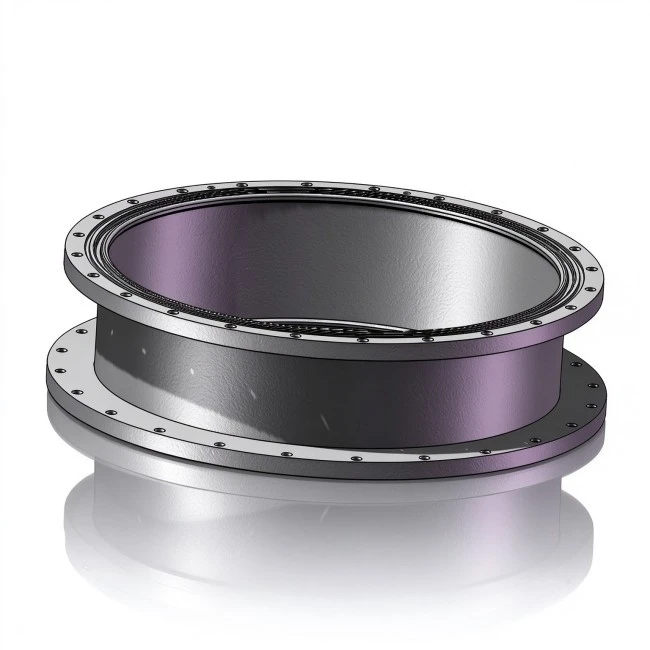
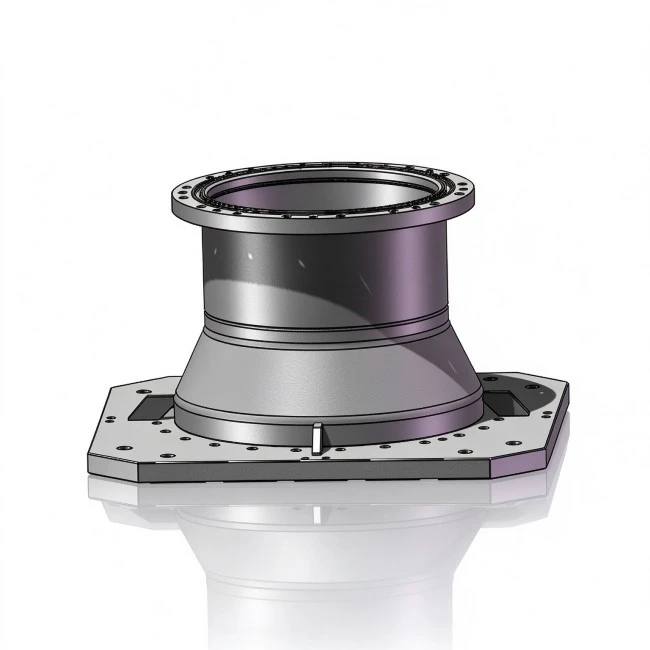
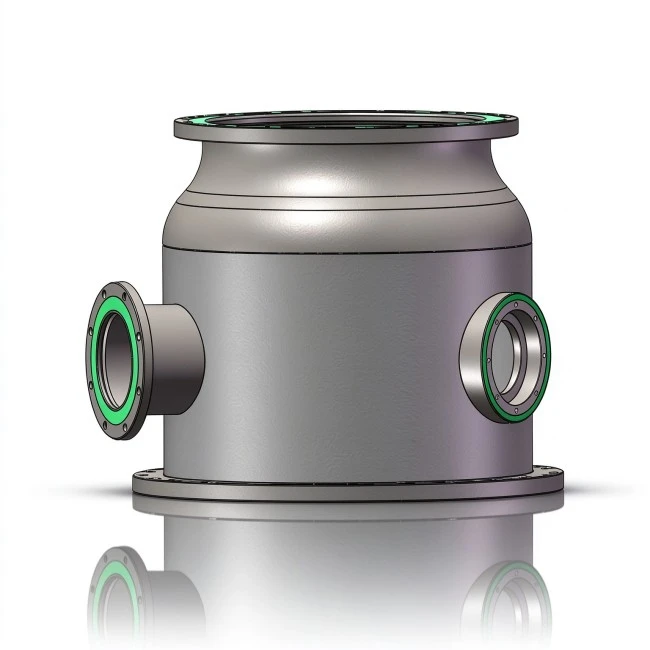
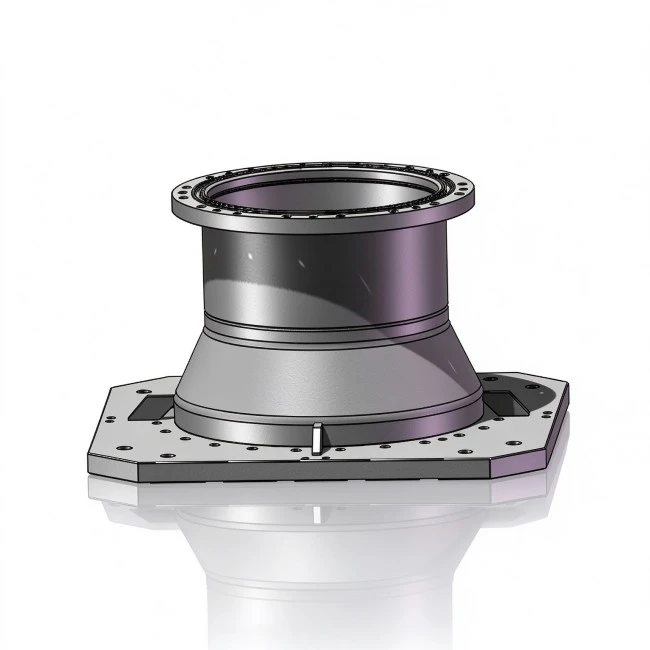
GIS Reducing Transition Busbar Enclosure is a dedicated tapered transition pressure housing designed to connect different inner-diameter GIS busbar sections. Unlike uniform straight bus enclosures, this reducer transition tank features asymmetric diameter transition structure, solving the assembly mismatch problem between large-caliber heavy-current bus sections and small-caliber standard bus runs.
This GIS busbar reducer housing adopts one-piece tapered forming technology, realizing smooth mechanical and electrical transition between two different-sized GIS bus segments. It keeps internal SF6 gas compartment integrated and sealed, avoiding extra intermediate adapter flanges. Every finished unit passes hydrostatic pressure test, full weld NDT, transition zone targeted helium leak scan and inner cavity particle purification, ensuring stable insulation and airtight performance for diameter-varied busbar connection nodes. Widely purchased for GIS upgrading, equipment matching and non-standard spacing adjustment projects.
|
Product Name |
GIS Reducing Transition Busbar Enclosure |
|
Main Material |
Aluminum Alloy / Low-magnet Carbon Steel |
|
Rated Voltage |
72.5kV / 126kV / 145kV / 252kV (Customized) |
|
Transition Feature |
Large-diameter & small-diameter asymmetric tapered transition |
|
Transition Custom Range |
Custom inlet/outlet diameter, transition length, taper angle |
|
Welding Process |
Integral forming + automatic welding + stress relief treatment |
|
Factory Test Items |
Hydrostatic pressure test, full weld UT/RT NDT, transition zone helium leak scan, inner particle cleaning |
|
Air Tightness Standard |
Annual SF6 leakage rate ≤ 0.3% |
|
Surface Treatment |
Sandblasting + anti-aging epoxy anti-corrosion coating |
|
Reserved Interface |
Standard GIS flange, SF6 inflation/density port, grounding terminals |
|
Execution Standard |
IEC 62271-203, GB/T 7674-2020 |
|
Certification |
ISO9001, ISO14001, ISO45001 |
Core Product Advantages
① Solve Different-Diameter Mismatch, Avoid Multi-section Splicing
This reducing transition tank directly connects large and small caliber GIS busbar housings. It replaces complicated multi-stage adapter combinations, simplifies busbar transition structure and reduces overall flange connection points on the whole GIS line.
② Smooth Tapered Inner Wall, Uniform Transition Electric Field
The inner tapered surface adopts arc smooth transition without sharp steps or abrupt changes. It effectively suppresses electric field concentration at variable-diameter joints, maintains low partial discharge status and improves long-term operation safety of transition nodes.
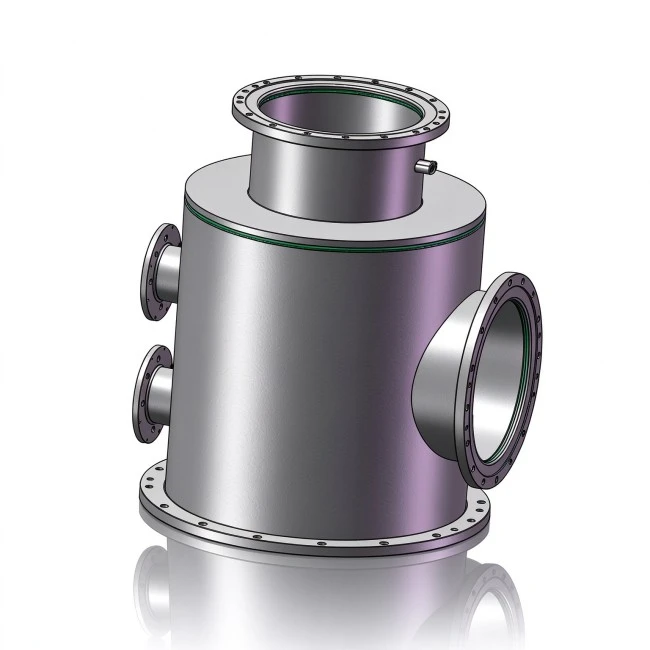
③ Integral Forming & Stress Relief, No Post-Warpage Deformation
One-piece integral forming and overall stress-relief treatment eliminate welding residual stress. The transition section will not deform or distort under long-term gas pressure and assembly pre-tightening force, ensuring consistent flange flatness and sealing stability.
④ Custom Taper Size & Angle, Adapt to Non-standard Renovation Projects
Transition length, inlet/outlet diameter difference and taper angle are all fully customizable. It perfectly matches old and new GIS equipment docking, cross-brand equipment transition and on-site non-standard spacing layout requirements.
⑤ Transition-Zone Focused Helium Inspection, Higher Sealing Reliability
Different from standard straight housings, we add targeted helium leak detection for the tapered transition welding zone, which is the highest-risk leakage area. It eliminates hidden micro-leaks at variable-diameter joints and improves project pass rate.
FAQ
Q1: What key parameters do I need to confirm first when customizing GIS Reducing Transition Busbar Enclosure?
You need to confirm large-end flange size, small-end flange size, total transition length, voltage grade and material type. These 5 key parameters determine full structural compatibility with your existing busbar system.
Q2: Why choose integrated factory reducing transition housing instead of on-site transition adaptation?
Factory integrated tapered transition ensures smooth inner electric field and qualified tightness. On-site splicing and modification will create uneven steps, causing partial discharge risks and unqualified acceptance data.
Q3: Can your reducing transition enclosure match different brand GIS busbar housings?
Yes. We fully customize both-end flange bolt circle, sealing groove and flatness according to your old equipment dimensions, realizing zero-error cross-brand transition docking.
Q4: What are the main quality differences between standard transition housing and your reinforced version?
Our products adopt transition zone stress relief and targeted helium testing. Ordinary suppliers ignore tapered weld stress processing, which easily causes long-term deformation and micro-leakage in operation.
Q5: Do you provide complete acceptance documents for customized reducing transition bus enclosure?
Each unit is equipped with material certificate, transition weld NDT report, special helium leak test record and dimension inspection report, fully meeting EPC project filing requirements.
Q6: Is single-piece customized order acceptable for substation maintenance and retrofit?
Yes. We support one-off custom orders for non-standard transition sections. No batch limit, and we keep drawing files archived for future repeated spare part orders.
Hot Tags: GIS reducing transition busbar enclosure, China GIS reducing transition busbar enclosure manufacturers, suppliers, factory


