

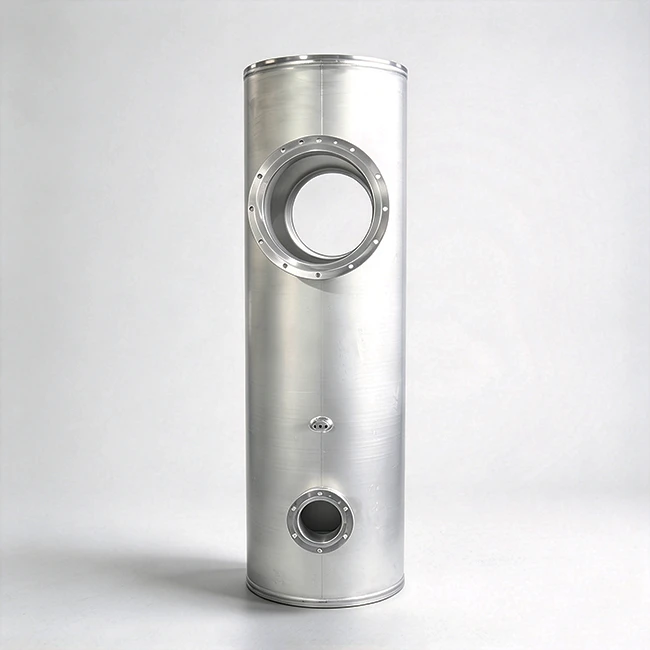
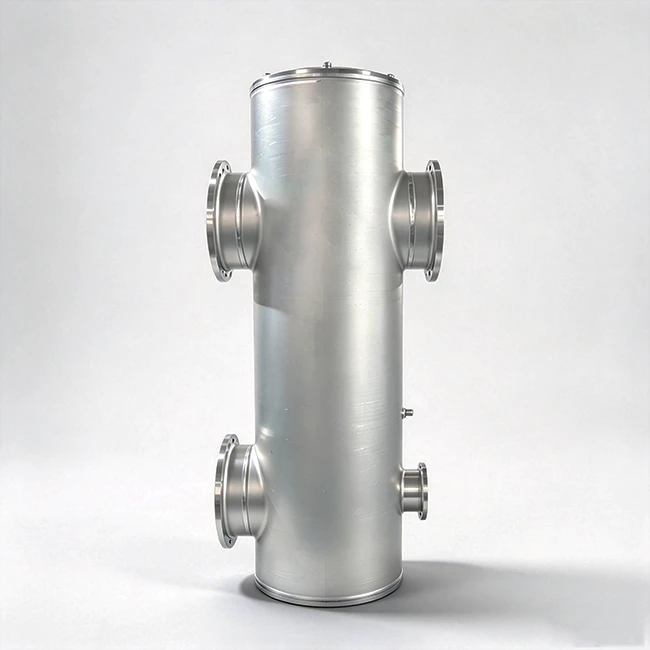
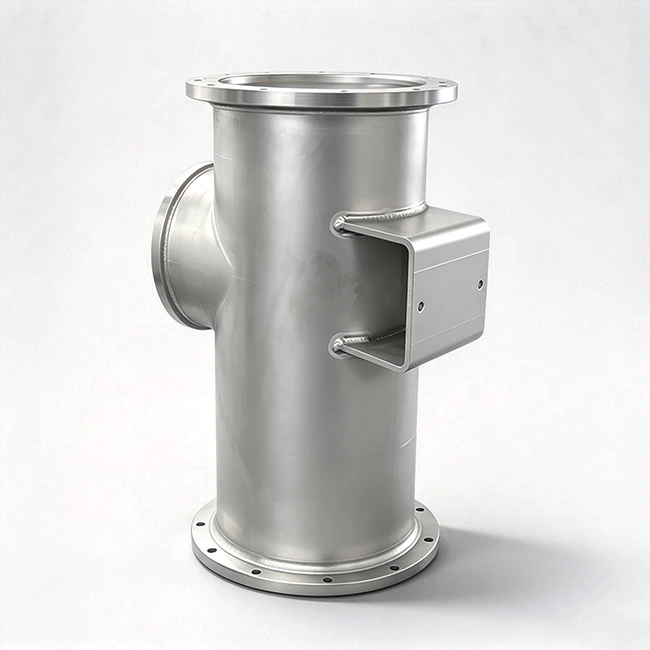
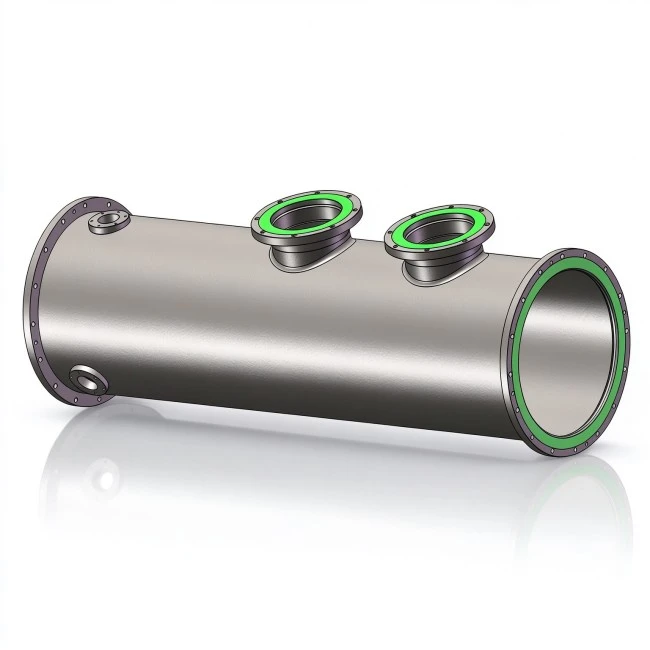
Cangzhou Jianbo Electric Power Equipment Co., Ltd. is one of the most reliable manufacturers and suppliers of gis straight section busbar enclosure in China. With abundant experience, we are committed to providing high quality customized service for global clients. If you're going to buy bulk gis straight section busbar enclosure made in China, welcome to get free sample from our factory.
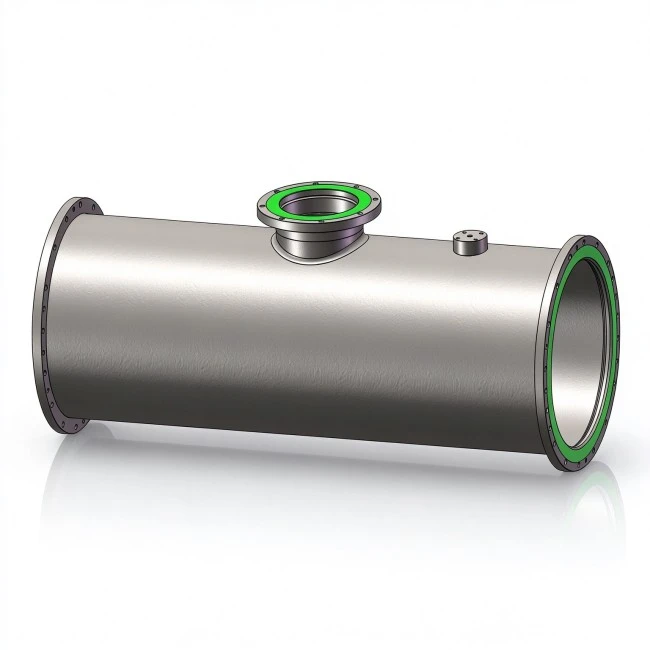
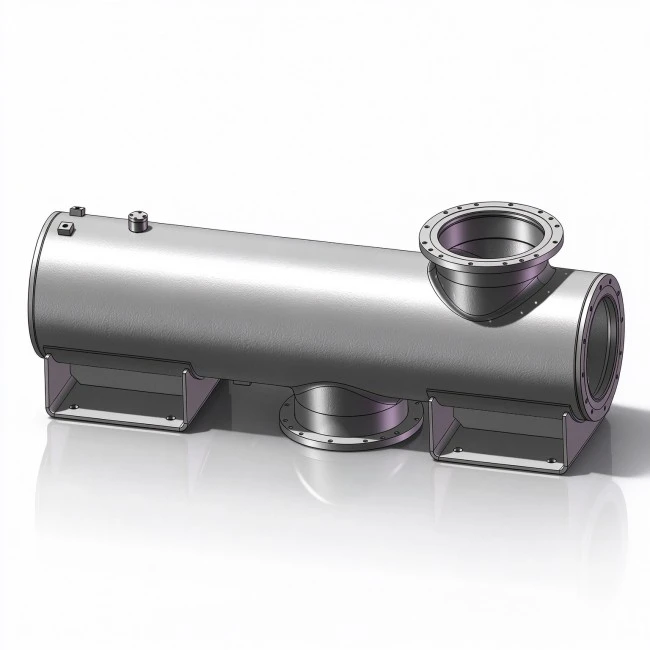
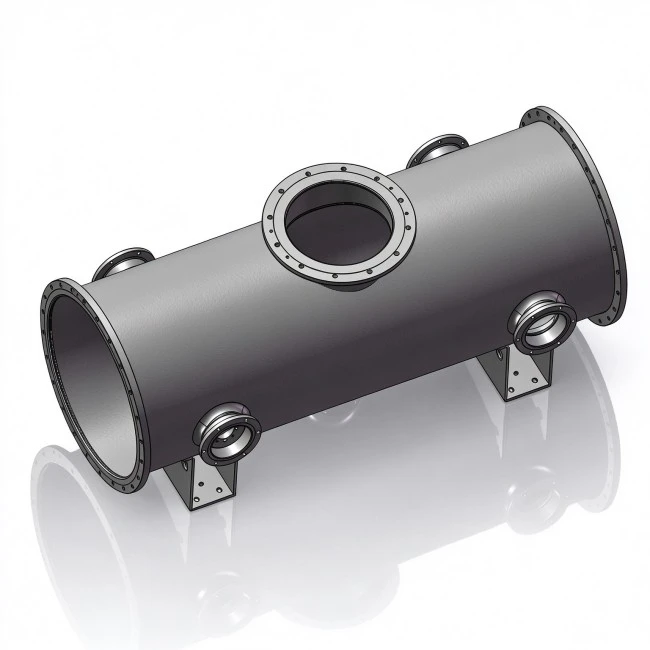
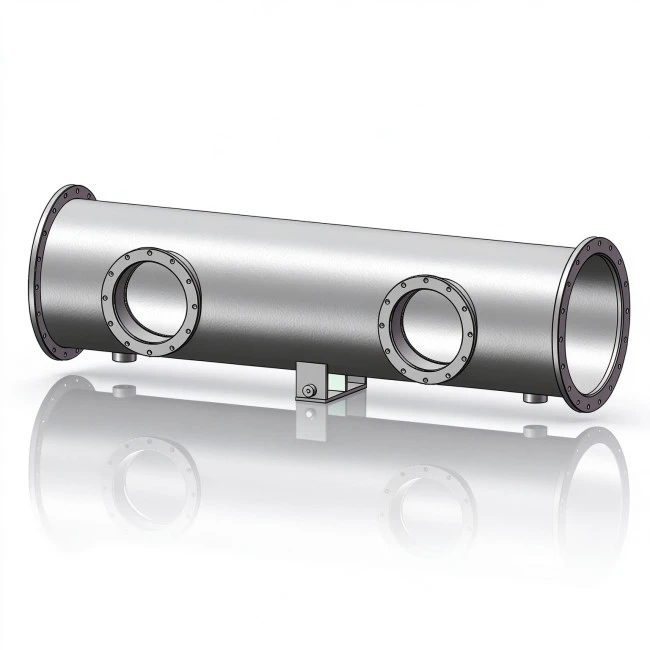
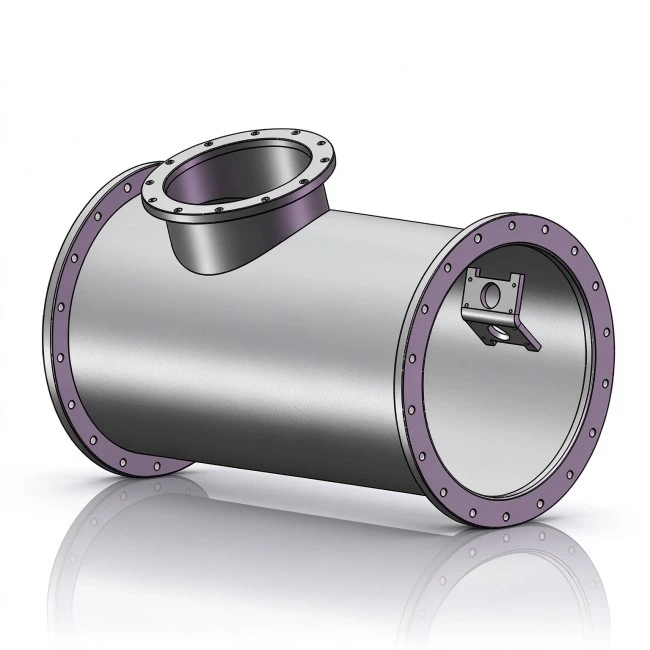
GIS Straight Section Busbar Enclosure is the straight-run metal pressure-tight housing that forms the main bus-bar passage inside gas-insulated switchgear. This GIS straight-run bus duct housing provides a sealed SF₆ gas-tight channel to accommodate the straight copper or aluminium bus-bar conductor, linking adjacent GIS functional bays together in a horizontal layout.
Unlike transition or branch-type shells, this GIS bus-bar straight tank features two-end standard mating flanges for quick modular connection. Each straight section can be manufactured to your exact finished length, matching the layout distance between switchgear units. Every finished GIS straight section busbar enclosure undergoes hydrostatic pressure testing, full-length weld NDT inspection, end-flange helium leak-scan and particle-free internal cleaning before dispatch. Target buyers: GIS system integrators, EPC substation contractors, HGIS manufacturers and high-voltage spare-part distributors.
|
Product Name |
GIS Straight Section Busbar Enclosure |
|
Main Material |
Aluminum alloy / Low-magnet carbon-steel |
|
Applicable Standards |
IEC 62271-203,GB/T 7674-2020,GB/T 11022 |
|
Rated Voltage |
72.5kV-252kV (custom-defined) |
|
Available Straight Length |
Custom-made from 300mm up to 6000mm |
|
Structural feature |
Straight cylindrical body, standard mating flanges at both ends; reserved earthing terminals |
|
Welding Process |
Longitudinal automatic TIG welding + stress-relief treatment |
Core Product Advantages
① Modular two-end flange design, excellent interchangeability
Both-end connection flanges of the GIS straight section busbar enclosure are CNC-machined with unified bolt-circle, sealing groove and flatness tolerance. The straight-run bus duct housing can be freely matched with standard GIS elbow, tee, breaker or transition housings, lowering assembly difficulty during site installation.
② Long-body straightness control avoids bus-bar assembly stress
Special forming and welding fixture is applied for the long GIS bus-bar straight tank. Post-welding straightness inspection is carried out over the full shell length. Low-deformation straight-run geometry prevents extra mechanical stress imposed onto internal bus-bar conductors after installation.
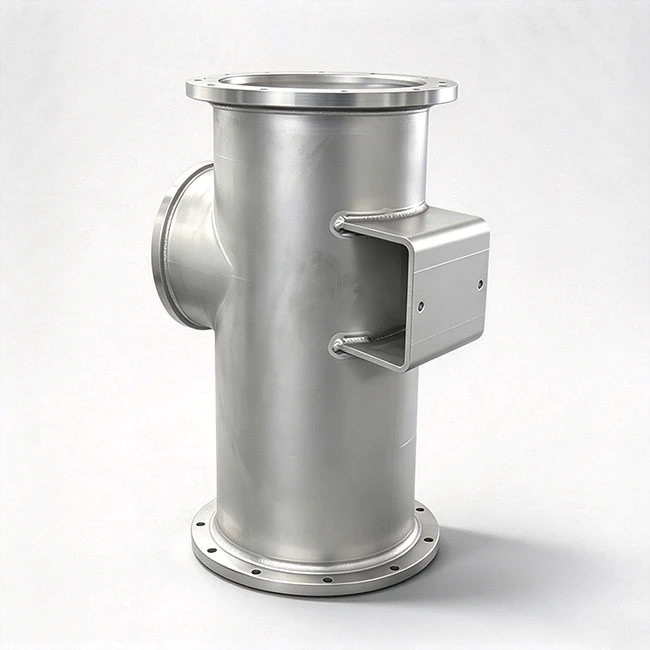

③ Full-length weld stress-relief reduces long-term leakage risk
Longitudinal weld seam of each GIS straight section busbar enclosure receives dedicated stress-relief treatment. It minimizes slow weld micro-deformation caused by residual internal stress after years of operation, improving long-term gas-tight stability for the straight-run bus duct housing.
④ Optimized inner-cavity round profile for uniform electric-field distribution
Inner wall of the GIS bus-bar straight tank maintains smooth circular profile without local protrusions or sharp welding marks. Uniform inner-cavity geometry helps distribute electric-field evenly around the bus-bar conductor and suppress partial-discharge risks along the straight bus run.
⑤ Wide-range customizable straight-length adapts to different substation layouts
The GIS straight section busbar enclosure can be fabricated in variable finished straight lengths. You are not limited to fixed standard sizes. Custom-length straight-run bus duct housing helps you optimise GIS bay spacing layout without extra transition adapter sections.
FAQ
Q1: What is the maximum allowable finished straight length you can produce for a single GIS Straight Section Busbar Enclosure?
Our standard production range for one-piece straight shell runs up to 6000 mm. Longer bus-bar routes need to be split into multiple straight sections connected via flange joints. Maximum single length also depends on transport container dimensions.
Q2: When comparing aluminum-alloy and low-magnet steel straight-run bus duct housing, which one brings lower eddy-current loss?
Aluminum alloy GIS bus-bar straight tank is non-magnetic and delivers significantly lower eddy-current loss. Low-magnet carbon-steel still generates minor eddy-current under rated-current operation, so aluminum-alloy version is recommended for long main bus-bar runs.
Q3: Which geometric tolerance indicators are strictly controlled on the finished GIS straight section busbar enclosure?
We mainly control full-length straightness of the cylinder, flange perpendicularity to tube axis, flange bolt-circle dimension, sealing-groove depth and flange flatness. These parameters guarantee trouble free flange to flange mating on-site.
Q4: Can we use one-length GIS bus-bar straight tank to replace two shorter straight-run bus duct housing sections?
It is technically possible only if the overall finished length matches the total distance, and you remove the intermediate flange joint. However you need to re-check internal bus-bar support layout and transport limits before making such change.
Q5: Why is longitudinal weld stress-relief treatment necessary for long GIS straight-run bus duct housing?
Long longitudinal welds create high residual internal stress. Without stress-relief, slow weld distortion may occur years after commissioning, which risks flange misalignment and SF₆ micro-leakage along the straight section.
Q6: Do both end flanges on the GIS straight section busbar enclosure always have identical dimensions?
By default, two-end flanges are identical for standard straight run bus duct housing. Dissimilar-flange straight sections are also available as custom-built parts, you need to specify both-side flange drawings at inquiry.
Hot Tags: GIS straight section busbar enclosure, China GIS straight section busbar enclosure manufacturers, suppliers, factory


